Ky A. Miller, MSW, LCSW
  • Home
  • Psychotherapy
  • Diagnosis
  • Training
  • Consultation
  • Contact
  • More
    • Home
    • Psychotherapy
    • Diagnosis
    • Training
    • Consultation
    • Contact
Ky A. Miller, MSW, LCSW
  • Home
  • Psychotherapy
  • Diagnosis
  • Training
  • Consultation
  • Contact

ASSESSMENT AND DIAGNOSIS

A Complicated History

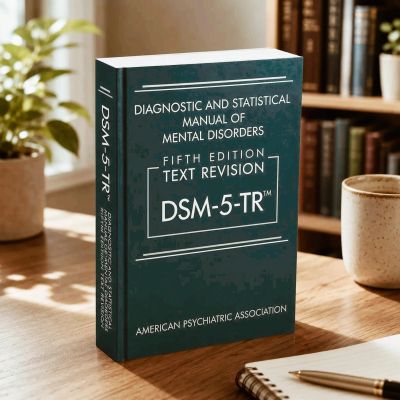
The DSM-5-TR is a diagnostic reference book used by mental health and medical professionals in the United States to standardize the way clinicians diagnose and classify mental health conditions. Although this is a crucial tool for diagnostic language and insurance billing, it faces significant criticisms. First, the DSM is symptom and productivity based. One example is that severity of impact is often measured by the ability to produce in a capitalistic society, ie show up to work, go to school, and take care of tasks - as opposed to centering a human-based impact. As a result of this framework, clients and therapists are required to document functional impairment as a condition to demonstrate medical necessity for sessions to be covered by insurance. 


Consequently, this leads to pathologizing relatively typical human experiences. As such, human suffering that anyone would experience under traumatic circumstances is positioned as a disorder or mental illness - when really, we are having very normal responses to various stressors. 


There are other concerns such as cultural and sociopolitical biases, particularly Eurocentric bias, that can pathologize coping strategies or behaviors found in cultures. The manual is a reflection of the era in which is was edited, right? In the past, the DSM classified homosexuality as a sociopathic personality disturbance and opposed to a natural variation of human existence. 


All of that said, there is some benefit to obtaining diagnostic clarity. For example, maybe you have been diagnosed with bipolar or borderline personality disorder - two of the most commonly misdiagnosed conditions; in this situation, diagnostic clarity can be helpful to determine treatment options (medication or psychotherapy or maybe a combination of both). Another example pertains to delayed diagnosis in the OCD realm: several studies have delineated long durations from symptom onset to diagnosis, sometimes averaging up to 13 years (Ziegler et al., 2021). 


As such, Ky is considerate and responsive to needs clients have around comprehensive assessment and diagnosis. Please take a look at some assessment options and reach out with any questions you have. Ky would be happy to hear from you!

DIAMOND ASSESSMENT

Diagnostic Interview for Anxiety, Mood, and OCD and Related Neuropsychiatric Disorders: The DIAMOND diagnostic interview and DIAMOND-KID diagnostic interview show very good inter-rater reliability, test-retest reliability, and convergent and divergent validity.

Anxiety

Social anxiety disorder (social phobia)

Panic disorder

Agoraphobia

Generalized anxiety disorder

Specific phobia

Separation anxiety disorder 

Depressive Conditions

Major Depressive Disorder

Persistent depressive disorder (dysthymia)

Premenstrual dysphoric disorder 

Neurodevelopmental/ADHD and tics

Obsessive-Compulsive Disorder (OCD)

Obsessive-compulsive disorder

Body dysmorphic disorder

Hoarding disorder

Trichotillomania

Excoriation (skin-picking) disorder 

Trauma- and stressor-related disorders

Posttraumatic stress disorder

Acute stress disorder

Adjustment disorder 

Bipolar/Mood

Bipolar I disorder

Bipolar II disorder

Cyclothymic disorder 

Schizophrenia/other psychotic events

Schizophrenia

Schizoaffective disorder

Delusional disorder 

Feeding and eating disorders

Anorexia nervosa

Bulimia nervosa

Binge eating disorder

Avoidant/restrictive food intake disorder 

Other categories

Somatic symptom disorder

Illness anxiety disorder 

Alcohol and substance use


Suicidal Ideation and challenging behaviors - children/teens

  •  School Refusal (DIAMOND-KID only) 
  •  Autism Spectrum Disorder (DIAMOND-KID only) 
  •  Pediatric Acute Onset Neuropsychiatric Syndrome (PANS; DIAMOND-KID only) 


Multidimensional Inventory of Dissociation (MID)

The Multidimensional Inventory of Dissociation (MID) is a comprehensive assessment designed to identify and better understand symptoms and patterns of dissociation. It examines a broad range of dissociative experiences, including disruptions in memory, identity, perception, emotion, and sense of self, while also assessing symptoms that can occur alongside dissociation.

Dissociative Experiences

Memory gaps and time loss 

Depersonalization and feeling detached from yourself 

Derealization and feeling that the world is unreal or dreamlike 

Identity confusion or shifts in sense of self 

Distinct self-states or parts 

Internal voices or experiences that feel unfamiliar or “not me” 

Trance-like states and altered awareness 

Unexplained or difficult-to-recall behaviors

Trauma-Related Experiences

Intrusive memories and flashbacks 

Trauma-related emotional or sensory experiences 

Body-based or somatic experiences associated with trauma 

Emotional numbing or disconnection 

Avoidance and alterations in awareness 

Disruptions in attachment, relationships, and sense of safety

Related Clinical Symptoms & Differential Assessment

PTSD and complex trauma symptoms 

Symptoms that may overlap with borderline personality disorder 

Identity disturbance and self-concept difficulties 

Unusual perceptual or internal experiences 

Emotional distress and dysregulation 

Patterns that may warrant further assessment for DID, OSDD, or other dissociative conditions 

Response-validity indicators that help clinicians interpret the assessment accurately

Add a footnote if this applies to your business

CONTACT KY DIRECTLY

Please complete this inquiry form and Ky will reach out for a no-cost consultation to mutually determine fit.

This site is protected by reCAPTCHA and the Google Privacy Policy and Terms of Service apply.

Copyright © 2026 Ky A. Miller, PLLC - All Rights Reserved.

This website uses cookies.

We use cookies to analyze website traffic and optimize your website experience. By accepting our use of cookies, your data will be aggregated with all other user data.

DeclineAccept